By Minh Nguyen, George Mathew, Noah Kim, and Brian Zhou
GSMST
Examining how justice systems respond to youth offenses through accountability, rehabilitation, and long-term public safety outcomes.
The juvenile justice system in the United States is founded on the principle that children and adolescents should be treated differently from adults under the law. Most legal systems distinguish between children who are too young to be criminally responsible and those who, while still minors, can be held accountable for their actions. This second group is typically the focus of underage prosecution. Unlike adult courts, juvenile proceedings do not use juries since a true "jury of peers" is not possible and instead emphasize rehabilitation over punishment, often using terms such as "delinquent" rather than "guilty" (Roth Legal, 2025) Roth Legal. (2025, July 9). Juvenile Crimes: How Courts Handle Offenders Under 18. Roth Legal. https://roth-legal.com/blog/juvenile-crimes-how-courts-handle-offenders-under-18/ Ctrl+Ccopy linkCtrl+Kopen source
Copied
.
However, this rehabilitative ideal is not always upheld in practice. In many jurisdictions, minors can be waived into adult court, where they face significantly harsher penalties, and 46 out of 50 states allow this transfer under certain conditions (Office of Juvenile Justice and Delinquency Prevention, n.d.-c) Office of Juvenile Justice and Delinquency Prevention. (n.d.-c). Trying Juveniles as Adults in Criminal Court: An Analysis of State Transfer Provisions. Retrieved March 22, 2026, from https://ojjdp.ojp.gov/sites/g/files/xyckuh176/files/pubs/tryingjuvasadult/transfer.html Ctrl+Ccopy linkCtrl+Kopen source
Copied
.
How the System Works
The process of navigating the juvenile system mirrors adult legal procedures in structure, even as it claims a different purpose. After arrest, a minor may be released with a citation or placed in a juvenile detention facility. A petition is then filed, followed by a detention hearing where a judge decides whether the youth remains in custody. In some cases, a fitness hearing determines whether the minor should be transferred to adult court. If the case proceeds, a jurisdiction hearing requires proof beyond a reasonable doubt, and a judge not a jury determines responsibility. Finally, a disposition hearing assigns consequences, ideally tailored toward rehabilitation (Los Angeles Criminal Lawyers, n.d.) Los Angeles Criminal Lawyers. (n.d.). Child Crime Prevention & Safety Center. Retrieved March 22, 2026, from https://childsafety.losangelescriminallawyer.pro/juvenile-court-process.html Ctrl+Ccopy linkCtrl+Kopen source
Copied
.
Where It Breaks Down
Despite its stated goals, the system continues to face significant challenges. Juvenile arrests have declined dramatically, dropping 74% from their mid-1990s peak (Puzzanchera, 2022) Puzzanchera, C. (2022). Trends in Youth Arrests for Violent Crimes (p. 4). US Department of Justice. https://ojjdp.ojp.gov/publications/trends-in-youth-arrests.pdf Ctrl+Ccopy linkCtrl+Kopen source
Copied
.
Yet policies shaped by the Superpredator scare of that era still influence how youth are treated today.
Moreover, as Bryan Stevenson argues in Just Mercy, fear and inequality can distort legal outcomes and move the system away from its rehabilitative purpose (Stevenson, 2015) Stevenson, B. (2015). Just mercy: A story of justice and redemption (Spiegel&Grau trade paperback edition) [Print]. Spiegel & Grau. https://justmercy.eji.org/ Ctrl+Ccopy linkCtrl+Kopen source
Copied
.
These trends continue today, with youth of color remaining disproportionately represented in detention, making up a large majority of incarcerated juveniles, raising ongoing concerns about structural bias (Mink, 2022) Mink, C. A. (2022, May 31). The juvenile justice system is plagued by striking racial disparities-But health is a big one. https://centerforhealthjournalism.org/our-work/insights/juvenile-justice-system-plagued-striking-racial-disparities-health-big-one Ctrl+Ccopy linkCtrl+Kopen source
Copied
.
As seen in Trina's and Charlie's cases detailed by Stevenson in Just Mercy, the systems of juvenile incarceration also contains a multitude of issues (Stevenson, 2015) Stevenson, B. (2015). Just mercy: A story of justice and redemption (Spiegel&Grau trade paperback edition) [Print]. Spiegel & Grau. https://justmercy.eji.org/ Ctrl+Ccopy linkCtrl+Kopen source
Copied
. In addition to the reports of systemic abuse and short staffing the incredible expense of the juvenile detention system call into question whether juveniles should be detention in the first place. Additionally, many youth enter the system with urgent medical needs, and a large proportion experience mental health or substance use disorders, which detention facilities are ill equipped to handel. Research suggests that incarceration in these systems can worsen conditions, disrupt education, and increase the likelihood of re-offending rather than reduce it (Mendel, 2023) Mendel, R. (2023). Why Youth Incarceration Fails: An Updated Review of the Evidence. The Sentencing Project. https://www.sentencingproject.org/reports/why-youth-incarceration-fails-an-updated-review-of-the-evidence/ Ctrl+Ccopy linkCtrl+Kopen source
Copied
.
These patterns suggest that, rather than fulfilling its rehabilitative mission, the juvenile justice system may be contributing to long-term harm.
Chapter 1
History of Underage Prosecution
Prosecution and punishment have long been central to justice systems, and when applied fairly, they are often seen as necessary and just. However, the prosecution of children is frequently underexamined, even though its consequences can be far more damaging than corrective. While it is true that actions carry consequences and responsibility must be taken, the nature of that punishment matters. For children in particular, punishment should follow thorough investigation and aim to guide and rehabilitate, rather than simply impose suffering without addressing underlying causes.
The Kissing Case and Its Legacy
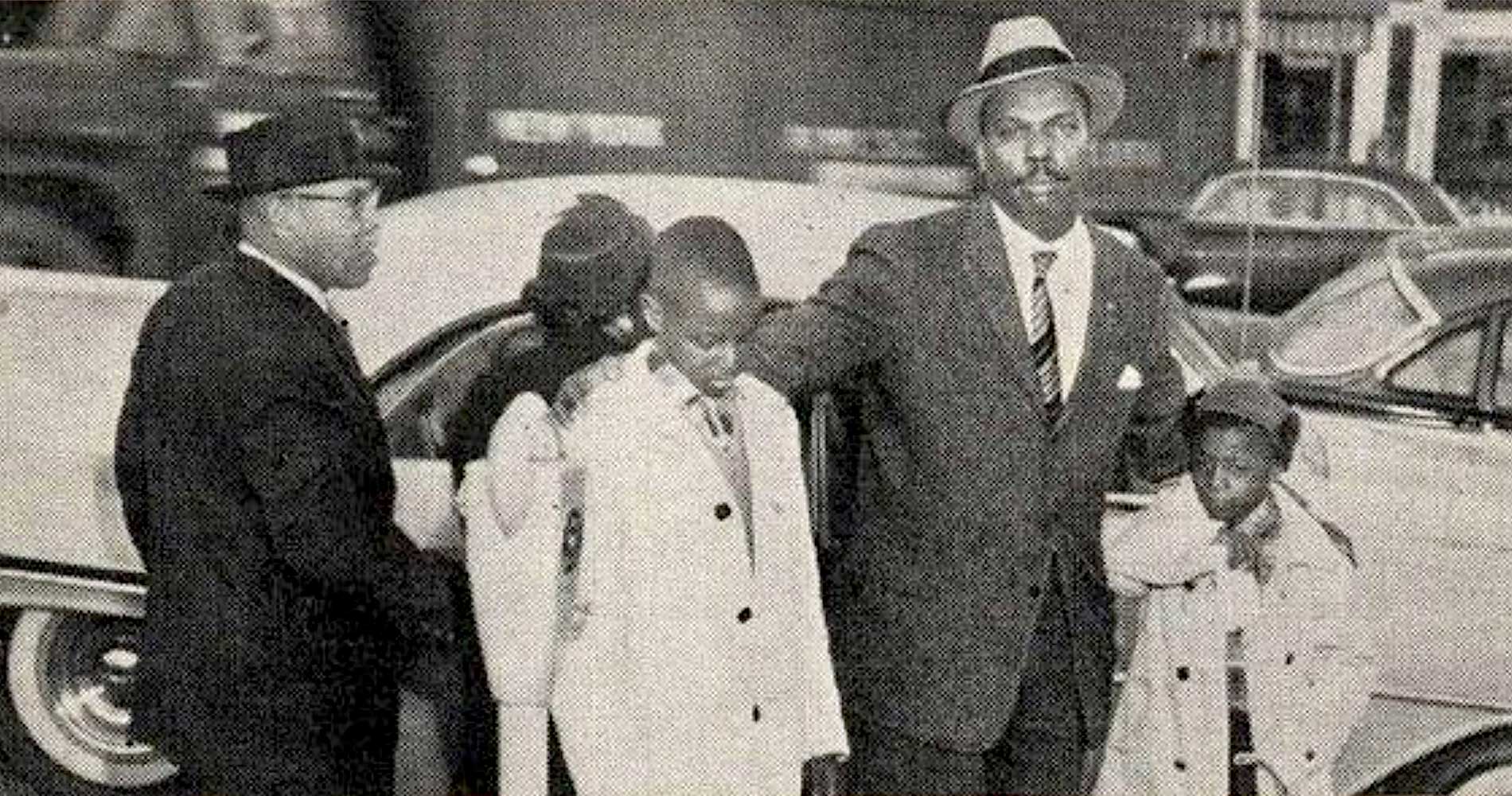
This tension becomes clear when examining real cases. In October 1958 in Monroe, North Carolina, 9-year-old James Hanover Thompson and his 8-year-old David "Fuzzy" Simpson were playing with other white children when a kissing game began. During the game, a white girl, Sissy Sutton, kissed David on the cheek first. Later, she told her parents, who reported the incident to the police. Officers confronted the boys at gunpoint, shouting racial epithets and calling them "little rapists." The boys were beaten and believed they were going to be killed. On Halloween, officers reportedly dressed as members of the Ku Klux Klan and threatened to lynch them, intensifying the trauma. The boys were charged with assault and molestation and, under the "separate but equal" system of Jim Crow laws, were ruled guilty and sentenced to spend the rest of their childhood in a reformatory (Rimer, 2024) Rimer, S. (2024). Oct. 28, 1958: Two Children Arrested in N. Carolina. Zinn Education Project. https://www.zinnedproject.org/news/tdih/the-kissing-case/ Ctrl+Ccopy linkCtrl+Kopen source
Copied
.
Photograph of the boys after a failed hearing, which sparked national outrage (Rimer, 2024) Rimer, S. (2024). Oct. 28, 1958: Two Children Arrested in N. Carolina. Zinn Education Project. https://www.zinnedproject.org/news/tdih/the-kissing-case/ Ctrl+Ccopy linkCtrl+Kopen source
Copied
.
The case gained widespread attention through media coverage, particularly after images of the boys crying were published. The NAACP appealed to the state superior court, but the judge refused to consider evidence that could support their release and sent them back to the reformatory. Public outrage grew both nationally and internationally, ultimately pressuring Governor Luther H. Hodges to pardon the boys on February 13, 1959 (Rimer, 2024) Rimer, S. (2024). Oct. 28, 1958: Two Children Arrested in N. Carolina. Zinn Education Project. https://www.zinnedproject.org/news/tdih/the-kissing-case/ Ctrl+Ccopy linkCtrl+Kopen source
Copied
, when influenced by racial bias and social context, can fail to protect the very children it is meant to rehabilitate.
Fear-Driven Policy
Decades later, similar tensions persisted in policy. The mid-1990s saw a peak in juvenile crime that fueled the "superpredator" scare, a widely publicized theory that warned of a generation of violent youth. This led to the passage of laws that made it easier to try juveniles as adults (Teske, 2017) Teske, S. (2017, February 27). Juvenile Justice Reforms Went Backwards in the '90s. Juvenile Justice Information Exchange. https://jjie.org/2017/02/27/juvenile-justice-reforms-went-backwards-in-the-90s/ Ctrl+Ccopy linkCtrl+Kopen source
Copied
.
However, the predicted wave of crime never materialized, and many of these policies were enacted even as juvenile crime rates were already declining (Office of Juvenile Justice and Delinquency Prevention, n.d.-c) Office of Juvenile Justice and Delinquency Prevention. (n.d.-c). Trying Juveniles as Adults in Criminal Court: An Analysis of State Transfer Provisions. Retrieved March 22, 2026, from https://ojjdp.ojp.gov/sites/g/files/xyckuh176/files/pubs/tryingjuvasadult/transfer.html Ctrl+Ccopy linkCtrl+Kopen source
Copied
.
Today, many of these laws remain in place, continuing to shape how young offenders are treated and raising questions about whether fear-driven policy has had lasting consequences.
National Juvenile Justice Indicators
Change in Youth Crime Indicators, 1990-2023
Three national indicators are shown as indexed trend lines over time. Graph structure is based on the Annie E. Casey Foundation reference chart
(Woods, 2026) .
Children make mistakes, and it is a natural part of development. Some actions are more serious than others, and in some cases, they reflect choices rather than accidents. Yet these choices are often shaped by environment, influence, and circumstances beyond a child's full control. Because children are still mentally and emotionally developing, systems of punishment should reflect that reality.
Ultimately, the goal of juvenile justice should not simply be to punish, but to provide the guidance, support, and intervention that may have been missing.
Chapter 2
Current Prosecution
Current Prosecution Pathway
While the details differ from state to state, the juvenile justice system in the United
States is typically separate from the adult criminal justice system
(Office of Juvenile Justice and Delinquency Prevention, n.d.-b) Office of Juvenile Justice and Delinquency Prevention. (n.d.-b). Facts About Youth Crime | Juvenile Justice 101. Retrieved March 22, 2026, from https://ojjdp.ojp.gov/juvenile-justice-101 Ctrl+Ccopy linkCtrl+Kopen source
Copied
.
After being arrested, a young person is usually either released to a parent or guardian or detained
(Office of Juvenile Justice and Delinquency Prevention, n.d.-b) Office of Juvenile Justice and Delinquency Prevention. (n.d.-b). Facts About Youth Crime | Juvenile Justice 101. Retrieved March 22, 2026, from https://ojjdp.ojp.gov/juvenile-justice-101 Ctrl+Ccopy linkCtrl+Kopen source
Copied
.
In 2021, 56% of youth referred to court received a hearing (Office of Juvenile Justice and Delinquency Prevention, 2025b) Office of Juvenile Justice and Delinquency Prevention. (2025b, February 21). Juvenile Court Case Processing. Department of Justice. https://ojjdp.ojp.gov/statistical-briefing-book/court/faqs/jcscf_display Ctrl+Ccopy linkCtrl+Kopen source
Copied
.
If the hearing leads to adjudication, the juvenile judge, without a jury, determines whether
the youth is delinquent beyond a reasonable doubt
(Georgia Code, 2024) Adjudication Hearing; Time Limitations; Findings, Title 15 - Courts Georgia Code SS 15-11-582 (2024). https://law.justia.com/codes/georgia/title-15/chapter-11/article-6/part-10/section-15-11-582/ Ctrl+Ccopy linkCtrl+Kopen source
Copied
.
In 2021, 48% of petitioned youth were adjudicated, and
28% of adjudicated youth were placed in a residential facility (Office of Juvenile Justice and Delinquency Prevention, 2025b) Office of Juvenile Justice and Delinquency Prevention. (2025b, February 21). Juvenile Court Case Processing. Department of Justice. https://ojjdp.ojp.gov/statistical-briefing-book/court/faqs/jcscf_display Ctrl+Ccopy linkCtrl+Kopen source
Copied
.
If the youth is found delinquent and is not released, a disposition hearing determines outcomes
such as release, detention, probation, or other services
(Department of Juvenile Justice, n.d.) Department of Juvenile Justice. (n.d.). Criminal Justice Process for Juveniles. Retrieved March 22, 2026, from https://djj.georgia.gov/criminal-justice-process-juveniles Ctrl+Ccopy linkCtrl+Kopen source
Copied
.
Juvenile court processing for a typical 1,000 delinquency cases, 2021
Note: Detail may not sum to total due to rounding. Percents are based on unrounded values.
In some states, including Georgia, juveniles may be prosecuted as adults for severe crimes,
such as murder or armed robbery
(Office of the DeKalb County District Attorney, n.d.) Office of the DeKalb County District Attorney. (n.d.). SB440 Unit. Office of the DeKalb County District Attorney. Retrieved March 22, 2026, from https://www.dekalbda.org/divisions_special_units/special_units/sb440_unit/index.php Ctrl+Ccopy linkCtrl+Kopen source
Copied
.
In 2021, there were approximately 2,800 U.S. youth transferred or waived into adult criminal court
(Office of Juvenile Justice and Delinquency Prevention, 2025b) Office of Juvenile Justice and Delinquency Prevention. (2025b, February 21). Juvenile Court Case Processing. Department of Justice. https://ojjdp.ojp.gov/statistical-briefing-book/court/faqs/jcscf_display Ctrl+Ccopy linkCtrl+Kopen source
Copied
.
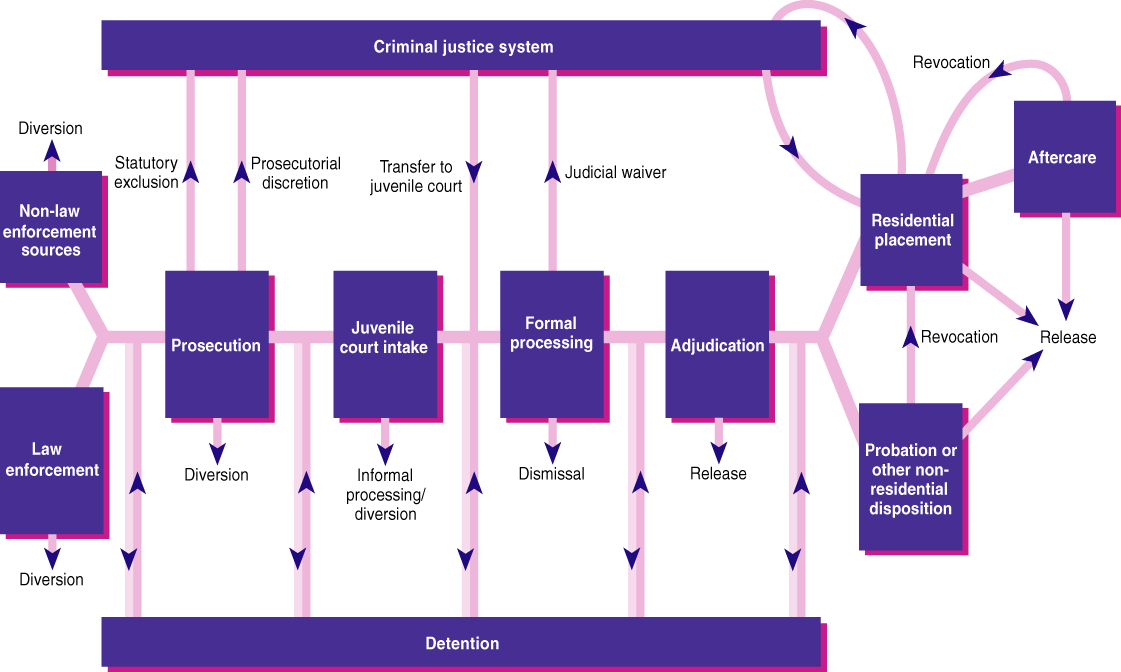
The overall process is also represented in OJJDP's national pathway diagram
(Office of Juvenile Justice and Delinquency Prevention, n.d.-a) Office of Juvenile Justice and Delinquency Prevention. (n.d.-a). Case Flow Diagram. Department of Justice. Office of Juvenile Justice and Delinquency Prevention. Retrieved March 22, 2026, from https://ojjdp.ojp.gov/statistical-briefing-book/structure_process/case Ctrl+Ccopy linkCtrl+Kopen source
Copied
.
"The juvenile justice system is not part of the criminal justice system. In most jurisdictions,
it includes separate judges and separate courtrooms from the adult system."
(Office of Juvenile Justice and Delinquency Prevention, n.d.-b) Office of Juvenile Justice and Delinquency Prevention. (n.d.-b). Facts About Youth Crime | Juvenile Justice 101. Retrieved March 22, 2026, from https://ojjdp.ojp.gov/juvenile-justice-101 Ctrl+Ccopy linkCtrl+Kopen source
Copied
Overview
The Juvenile Justice and Delinquency Prevention Act includes major protections for youth
(Office of Juvenile Justice and Delinquency Prevention, n.d.-b) Office of Juvenile Justice and Delinquency Prevention. (n.d.-b). Facts About Youth Crime | Juvenile Justice 101. Retrieved March 22, 2026, from https://ojjdp.ojp.gov/juvenile-justice-101 Ctrl+Ccopy linkCtrl+Kopen source
Copied
:
Juveniles should not be held in adult jails and lockups.
If juveniles are held in adult facilities, they cannot see or hear adult inmates.
Juveniles should not be detained for status offenses.
States must work to reduce racial and ethnic disparities within youth justice systems.
OJJDP also notes that many states use Balanced and Restorative Justice (BARJ), which focuses
on public safety, youth skill development, and accountability to victims and communities
(Office of Juvenile Justice and Delinquency Prevention, n.d.-b) Office of Juvenile Justice and Delinquency Prevention. (n.d.-b). Facts About Youth Crime | Juvenile Justice 101. Retrieved March 22, 2026, from https://ojjdp.ojp.gov/juvenile-justice-101 Ctrl+Ccopy linkCtrl+Kopen source
Copied
.
Pregnancy Prosecution and Risks in Detention
Criminalization of Pregnancy and Related Offenses
While underage pregnancy itself is not directly prosecuted, minors may still face criminal
charges related to their pregnancy or its outcome. Laws originally designed for other purposes
are often applied in these cases, particularly when a pregnancy ends or is concealed.
For example, in Nebraska, Celeste Burgess, a 17-year-old, was sentenced to
"three months in jail" and "two years of probation" for disposing of a fetus after a
self-managed abortion, while her mother faced up to five years in prison for assisting her
(Bailey, 2023) Bailey, C. (2023, July 21). Nebraska teen jailed for illegal disposal of her aborted foetus. BBC News. https://www.bbc.com/news/world-us-canada-66271537 Ctrl+Ccopy linkCtrl+Kopen source
Copied
.
These prosecutions often rely on laws such as:
Abuse of a corpse
Concealing a birth
Manslaughter
Chemical endangerment of a child
Practicing medicine without a license
Although these laws are not explicitly written to target minors, they are frequently applied
in situations where young individuals experience fear, lack of access to care, or limited
knowledge of legal and medical systems.
Sexual Victimization of Youth in Detention
Youth placed in detention facilities face a significant risk of sexual abuse. According to
the Bureau of Justice Statistics (BJS), 7.1% of youth in juvenile correctional facilities
reported sexual victimization in 2018 (Bureau of Justice Statistics, 2019) Bureau of Justice Statistics. (2019). Sexual Victimization Reported by Youth in Juvenille Facilities, 2018 [Summary]. https://bjs.ojp.gov/content/pub/pdf/svryjf18_sum.pdf Ctrl+Ccopy linkCtrl+Kopen source
Copied
.
Although this represents a decline from earlier years - 12% in 2009 and
9.5% in 2012 - the rates remain alarmingly high
(Office Of Justice Programs, 2009) Office Of Justice Programs. (2009, December 31). 12 Percent of Adjudicated Youth Report Sexual Victimization in Juvenile Facilities [Memo]. https://bjs.ojp.gov/sites/g/files/xyckuh236/files/media/document/svjfry09pr.pdf Ctrl+Ccopy linkCtrl+Kopen source
Copied
(Bureau of Justice Statistics, 2025) Bureau of Justice Statistics. (2025). PREA Data Collection Activities, 2024 (No. 309976; PREA Data Collection Activities). US Department of Justice. https://bjs.ojp.gov/document/pdca24.pdf Ctrl+Ccopy linkCtrl+Kopen source
Copied
.
Notably, youth in juvenile facilities experience higher rates of sexual victimization
than adults in prisons (4.0%) or jails (3.2%) (Bureau of Justice Statistics, 2025) Bureau of Justice Statistics. (2025). PREA Data Collection Activities, 2024 (No. 309976; PREA Data Collection Activities). US Department of Justice. https://bjs.ojp.gov/document/pdca24.pdf Ctrl+Ccopy linkCtrl+Kopen source
Copied
.
Even more concerning, less than 10% of minors who experience sexual abuse report it,
suggesting that actual rates may be significantly higher than documented
(Seacrest, 2025) Seacrest, L. (2025). Abused by the State: The Hidden Crisis Inside America's Juvenile Detention System. R Street. https://assets.aecf.org/m/resourcedoc/rstreet-abusedbythestate-2025.pdf Ctrl+Ccopy linkCtrl+Kopen source
Copied
.
Bureau of Justice Statistics · NSYC
Percent of youth in juvenile facilities reporting sexual victimization, 2012 and 2018
Comparison across major victimization categories reported by youth in custody.
2012*
2018
† Significant difference at 95% confidence
U.S. total
†
Youth-on-youth
†
Staff sexual misconduct
†
0246810
Percent
Note: Based on 6,049 interviews of youth in 2018 and 8,707 interviews of youth in 2012.
Details may not sum to totals due to youth reporting multiple types of victimization.
* Comparison group. † Difference with comparison group is significant at the 95% confidence level.
Source: Bureau of Justice Statistics, National Survey of Youth in Custody, 2012 and 2018
(Bureau of Justice Statistics, 2025) Bureau of Justice Statistics. (2025). PREA Data Collection Activities, 2024 (No. 309976; PREA Data Collection Activities). US Department of Justice. https://bjs.ojp.gov/document/pdca24.pdf Ctrl+Ccopy linkCtrl+Kopen source
Copied
.
Risks in Adult Facilities
When juveniles are placed in adult facilities, the risks increase dramatically. Federal law
notes that juveniles are five times more likely to be sexually assaulted in adult
facilities than in juvenile facilities, often within the first 48 hours of incarceration
(United States Code, 2003) Prison Rape Elimination Act (PREA), United States Code SS 30301 - Findings (2003). https://uscode.house.gov/view.xhtml?req=(title:34%20section:30301%20edition:prelim) Ctrl+Ccopy linkCtrl+Kopen source
Copied
.
This highlights the dangers of prosecuting youth as adults, particularly when considering
the physical and psychological risks associated with incarceration.
Family and Pregnancy in Detention
Data from the Office of Juvenile Justice and Delinquency Prevention shows that
12% of youth in custody report currently expecting a child, and
20% either have or are expecting children (Sedlak & Bruce, 2010) Sedlak, A. J., & Bruce, C. (2010). Youth's Characteristics and Backgrounds. Office of Juvenile Justice and Delinquency Prevention. https://www.ojp.gov/pdffiles1/ojjdp/227730.pdf Ctrl+Ccopy linkCtrl+Kopen source
Copied
.
This reflects the broader reality that many incarcerated youth are navigating complex family,
health, and socioeconomic challenges - factors that are often overlooked in punitive justice
approaches. Related national reporting on custody-related pregnancy and birth outcomes is also
tracked by the Prison Policy Initiative
(Wang & Schindeler, 2025) Wang, L., & Schindeler, B. (2025, July 1). Birth behind bars: Ten years of U.S. jail births covered in the news highlight horrific experiences and minimal data collection. Prison Policy Intiative Briefings. https://www.prisonpolicy.org/blog/2025/07/01/jail_births_media_project/ Ctrl+Ccopy linkCtrl+Kopen source
Copied
.
Private Detention Profit Incentives and Abuse
The prison-industrial complex includes public-private contracts that can incentivize youth
imprisonment. In 2015, Luzerne County, Pennsylvania, paid PA Child Care LLC $345 per day for
each child
(Luzerne County, 2015) Luzerne County. (2015, March 4). County of Luzerne: Contract review worksheet [Contract review worksheet]. https://www.luzernecounty.org/DocumentCenter/View/2367/PA-Child-Care-Contract-Attachment-3-of-3-PDF Ctrl+Ccopy linkCtrl+Kopen source
Copied
.
In a 2009 information filing
(Wex Definitions Team, 2025) Wex Definitions Team. (2025, July). Information. Cornell Law. https://www.law.cornell.edu/wex/information Ctrl+Ccopy linkCtrl+Kopen source
Copied
,
a court document alleged that the LLC paid Conahan and Ciavarella more than $2.6 million and
asked them to send juveniles to the private facility, cut funding from the county juvenile
detention facility, facilitate construction, and seal records in a civil case
(United States v. Conahan, 2009) United States v. Conahan. (2009). District Court, M.D. Pennsylvania. https://www.courtlistener.com/docket/28596393/1/united-states-v-conahan/ Ctrl+Ccopy linkCtrl+Kopen source
Copied
.
The arrangement was highly lucrative for the company: a single 2004 agreement was valued at
$58 million, while reporting noted the county could have built its own juvenile center for about
$9 million
(United States v. Conahan, 2009) United States v. Conahan. (2009). District Court, M.D. Pennsylvania. https://www.courtlistener.com/docket/28596393/1/united-states-v-conahan/ Ctrl+Ccopy linkCtrl+Kopen source
Copied
(Rubinkam, 2011) Rubinkam, M. (2011, February 19). Pa. judge guilty of racketeering in kickback case. Associated Press. https://apnews.com/article/pennsylvania-racketeering-scranton-863f02b89f824c0296cdbbcf8a539bbf Ctrl+Ccopy linkCtrl+Kopen source
Copied
.
In 2007, Hillary Transue said she was "told to sign" a document waiving attorney rights in
Ciavarella's court without explanation
(Transue, 2022) Transue, H. (2022). Hillary Transue written testimony at Senate Judiciary Committee hearing. https://judiciary.pasenategop.com/wp-content/uploads/sites/42/2022/05/transue.pdf Ctrl+Ccopy linkCtrl+Kopen source
Copied
.
She was then sent to 90 days of juvenile detention
(Rose, 2011) Rose, J. (2011, February 20). Pa. juvenile justice in spotlight after verdict. NPR. https://www.npr.org/2011/02/20/133920701/Pa-Verdict-Highlights-Flaws-In-Juvenile-Justice-System Ctrl+Ccopy linkCtrl+Kopen source
Copied
for publishing a website claiming the vice principal had a "fetish for Johnny Depp in boys'
underwear"
(Staff, 2014) Staff. (2014, April 8). OP-ED: Children deserve our honesty and compassion. Juvenile Justice Information Exchange. https://jjie.org/2014/04/08/op-ed-children-deserve-our-honesty-and-compassion/ Ctrl+Ccopy linkCtrl+Kopen source
Copied
.
After the corruption was exposed, Ciavarella received a 28-year sentence and Conahan received
17 years (later reduced to home confinement after 11 years). The private company paid
$25 million in damages, and the lawyer who paid bribes received 18 months in prison
(The Associated Press, 2022) The Associated Press. (2022, August 18). Former judges who sent kids to jail for kickbacks must pay more than $200 million. NPR. https://www.npr.org/2022/08/18/1118108084/michael-conahan-mark-ciavarella-kids-for-cash Ctrl+Ccopy linkCtrl+Kopen source
Copied
(Neil, 2011) Neil, M. (2011, November 4). Lawyer who paid $725K kickbacks to judges in Pa. "Kids for Cash" case gets 18 months. ABA Journal. https://www.abajournal.com/news/article/lawyer_who_paid_kickbacks_to_judges_in_pa._kids-for-cash_case_gets_18_month Ctrl+Ccopy linkCtrl+Kopen source
Copied
.
A court also ordered more than $200 million in compensation, though reporting indicated that sum
would likely remain unrealized
(The Associated Press, 2022) The Associated Press. (2022, August 18). Former judges who sent kids to jail for kickbacks must pay more than $200 million. NPR. https://www.npr.org/2022/08/18/1118108084/michael-conahan-mark-ciavarella-kids-for-cash Ctrl+Ccopy linkCtrl+Kopen source
Copied
.
Pennsylvania is not the only state where profit has shaped detention practices. In 2018,
40% of U.S. detention facilities were private, and in Florida in 2013, that figure was 100%
(LaTona & Fox, 2020) LaTona, F., & Fox, J. (2020, August 21). "I can't breathe": Hidden abuse in some private detention centers. Kids Imprisoned. https://kidsimprisoned.news21.com/for-profit-juvenile-detention-centers/ Ctrl+Ccopy linkCtrl+Kopen source
Copied
(Shaikh, 2013) Shaikh, N. (Host). (2013, October 23). "Prisoners of profit": Despite widespread abuse, private juvenile jail firm expands empire [Broadcast]. Democracy Now. http://www.democracynow.org/2013/10/23/prisoners_of_profit_despite_widespread_abuse Ctrl+Ccopy linkCtrl+Kopen source
Copied
.
Genesia Williams-Wilkerson, a former case manager at Youth Services International, reported
that staff were told to falsify training records because "they just worry about the audits.
They're not worried about these kids' lives"
(Kirkham, 2013) Kirkham, C. (2013, October 23). Florida's lax oversight enables systemic abuse at private youth prisons. The Huffington Post. https://projects.huffingtonpost.com/prisoners-of-profit-2 Ctrl+Ccopy linkCtrl+Kopen source
Copied
.
In 2020, staff at a Michigan private detention center operated by Sequel Youth & Family
Services through Lakeside Academy choked a 16-year-old boy to death
(Lieff Cabraser Heimann & Bernstein, n.d.) Lieff Cabraser Heimann & Bernstein. (n.d.). Sequel Youth vivant child sexual abuse. Retrieved March 24, 2026, from https://www.lieffcabraser.com/survivors/sequel-youth-vivant/ Ctrl+Ccopy linkCtrl+Kopen source
Copied
,
even as reporting cited monthly charges of $6,200 to $7,100 per youth
(LaTona & Fox, 2020) LaTona, F., & Fox, J. (2020, August 21). "I can't breathe": Hidden abuse in some private detention centers. Kids Imprisoned. https://kidsimprisoned.news21.com/for-profit-juvenile-detention-centers/ Ctrl+Ccopy linkCtrl+Kopen source
Copied
.
These incidents highlight broader and underreported abuse tied to juvenile detention
profiteering, with costs borne by both taxpayers and detained youth.
Chapter 3
Current Issues Being Created by Underage Prosecution
Introduction
The number of youth detentions has fallen drastically since its peak in the late 1990s,
with the one-day count of youths in residential placements falling from 107,493 in 1999,
the peak year, to roughly 29,314 in 2023 (Rovner, 2025) Rovner, J. (2025, November 20). Youth Justice by the Numbers. The Sentencing Project. https://www.sentencingproject.org/policy-brief/youth-justice-by-the-numbers/ Ctrl+Ccopy linkCtrl+Kopen source
Copied
. As reported by
the Sentencing Project, an advocacy group focused on changing sentencing and addressing
racial bias in the criminal justice system, 45% of the youths in this one-day count were
held in detention awaiting adjudication, equivalent to trial in the criminal justice system,
and 53% were committed to a secure facility, equivalent to being imprisoned
(Rovner, 2025) Rovner, J. (2025, November 20). Youth Justice by the Numbers. The Sentencing Project. https://www.sentencingproject.org/policy-brief/youth-justice-by-the-numbers/ Ctrl+Ccopy linkCtrl+Kopen source
Copied
.
This one-day count does not accurately depict the scope youth detainment, however,
with the Sentencing Project stating that there are roughly 150,000 detention admissions
in 2022, the most recent data, with this figure even excluding youths held "on criminal
charges, for violations of probation, or for status offenses" (Rovner, 2025) Rovner, J. (2025, November 20). Youth Justice by the Numbers. The Sentencing Project. https://www.sentencingproject.org/policy-brief/youth-justice-by-the-numbers/ Ctrl+Ccopy linkCtrl+Kopen source
Copied
.
As common as youth detainment is though, it is less efficient and effective than alternatives.
Detainment centers are poor environments
As an example, investigations by the Lexington Herald-Leader in Kentucky identified
more than 100 incidents between 2018 and 2021 where staff in juvenile correctional
facilities used excessive force against the youths, with several cases involving youths
being hospitalized. Furthermore, the newspaper reported there were instances where
facility staff inappropriately engaged in sexual contact with the detained children,
used racial slurs, threatened violence, failed to stop sexual assault between the detained
youth, or were unable to contain riots, forcing the police to step in
(Seacrest, 2025) Seacrest, L. (2025). Abused by the State: The Hidden Crisis Inside America's Juvenile Detention System. R Street. https://assets.aecf.org/m/resourcedoc/rstreet-abusedbythestate-2025.pdf Ctrl+Ccopy linkCtrl+Kopen source
Copied
.
Sexual abuse is not an issue specific to Kentucky, however, with the National Survey of
Youth in Custody report published by the Bureau of Justice Statistics in 2019 finding that
an estimated 7.1% of juveniles held in detention centers reported sexual victimization in 2018,
with some states reporting as high as 21.5% of juveniles experiencing sexual abuse
(Smith & Stroop, 2019) Smith, E., & Stroop, J. (2019). Sexual Victimization Reported by Youth in Juvenile Facilities, 2018 (National Survey of Youth in Custody) [Special Report]. Bureau of Justice Statistics. https://bjs.ojp.gov/content/pub/pdf/svryjf18.pdf Ctrl+Ccopy linkCtrl+Kopen source
Copied
. Disheartingly, according to a report by R Street, less than
one tenth of all sexual abuse allegations are verified and the perpetrators seldom face
criminal charges (Seacrest, 2025) Seacrest, L. (2025). Abused by the State: The Hidden Crisis Inside America's Juvenile Detention System. R Street. https://assets.aecf.org/m/resourcedoc/rstreet-abusedbythestate-2025.pdf Ctrl+Ccopy linkCtrl+Kopen source
Copied
.
Bureau of Justice Statistics - NSYC
Youth Reporting Sexual Victimization in Juvenile Facilities
Percent of youth reporting, by incident type - 2012 and 2018
2012
2018
Change shown as % relative to 2012
Total Prevalence Rate +All sexual victimization
-25%
2012
9.5%
2018
7.1%
Youth-on-Youth Victimization +Involving force or coercion
-24%
2012
2.5%
2018
1.9%
Staff Sexual Misconduct +All staff-involved incidents
-25%
2012
7.7%
2018
5.8%
Staff - With Force or Coercion +Force or coercion reported
-40%
2012
3.5%
2018
2.1%
Staff - No Force or Coercion Willing or unknown
-17%
2012
4.7%
2018
3.9%
0%2.5%5%7.5%10%
Source: Bureau of Justice Statistics, National Survey of Youth in Custody (NSYC), 2012 and 2018 (Table 1)
(Smith & Stroop, 2019) .
Difference from 2012 is statistically significant at the 5% significance level.
* 2012 figures may not sum to subtotals due to rounding.
Moreover, it is not just sexual abuse that is relatively common in these detention
facilities. In a report by The Annie E. Casey Foundation, since 2000, 29 states and the
District of Columbia have documented systematic maltreatment in their correctional
facilities, with another three states reporting substantial evidence of maltreatment
(Mendel, 2015) Mendel, R. (2015). Maltreatment of Youth in U.S. Juvenile Corrections Facilities. The Annie E. Case Foundation. https://assets.aecf.org/m/resourcedoc/aecf-maltreatmentyouthuscorrections-2015.pdf Ctrl+Ccopy linkCtrl+Kopen source
Copied
. More recent examples include investigations from the
Department of Justice in 2024 regarding five secure facilities managed by the Texas
Juvenile Justice Department (TJJD), and found excessive use of physical force and pepper
spray, prolonged isolation during detention, stark conditions, inadequate access to mental
health and education, and enduring sexual abuse (U.S. Department of Justice & Civil Rights Division, 2024) U.S. Department of Justice & Civil Rights Division. (2024). Investigation of the Texas Juvenile Justice Department [Findings Report]. https://www.justice.gov/d9/2024-07/2024_tjjd_findings_report.pdf Ctrl+Ccopy linkCtrl+Kopen source
Copied
.
Specifically, the report details that children can commonly spend between 17 to 22 hours a
day alone in their cells all the while forced to stay longer in these facilities as the DOJ
found that in a period of 13 months, 100% of children with disabilities got their sentence
extended and 93% got their sentence extended at least twice, effectively adding an average
of eight months to their sentences (U.S. Department of Justice & Civil Rights Division, 2024) U.S. Department of Justice & Civil Rights Division. (2024). Investigation of the Texas Juvenile Justice Department [Findings Report]. https://www.justice.gov/d9/2024-07/2024_tjjd_findings_report.pdf Ctrl+Ccopy linkCtrl+Kopen source
Copied
. However, none of these
findings were particularly new, as the TJJD failed to implement measures to prevent continued
sexual abuse even after more than two decades of notice, ignoring problems regarding staff
training and oversight, leading to a pervasive atmosphere of sexual abuse, grooming, and lack
of staff accountability and training (U.S. Department of Justice & Civil Rights Division, 2024) U.S. Department of Justice & Civil Rights Division. (2024). Investigation of the Texas Juvenile Justice Department [Findings Report]. https://www.justice.gov/d9/2024-07/2024_tjjd_findings_report.pdf Ctrl+Ccopy linkCtrl+Kopen source
Copied
. Unfortunately, the TJJD's
staffing issues are not specific to Texas, with the report by R Street indicating that 90%
of these state run centers are reporting moderate to severe staffing shortages, with some
areas being short 30% to 40% on staff, leading to lower hiring standards and inadequate
training (Seacrest, 2025) Seacrest, L. (2025). Abused by the State: The Hidden Crisis Inside America's Juvenile Detention System. R Street. https://assets.aecf.org/m/resourcedoc/rstreet-abusedbythestate-2025.pdf Ctrl+Ccopy linkCtrl+Kopen source
Copied
.
Experiencing abuse has significant consequences. According to a 2014 study in Southern
California, 77.4% of children reported experiencing one or more forms of physical,
psychological, or sexual abuse during detention and found that the number of incidents
of abuse experienced was positively correlated with social and emotional problems after
release, with more than one third of youth reporting mild to significant depression
symptoms and 14.5% showing clinically significant signs of posttraumatic stress reactions
(Dierkhising et al., 2014) Dierkhising, C. B., Lane, A., & Natsuaki, M. N. (2014). Victims behind bars: A preliminary study of abuse during juvenile incarceration and post-release social and emotional functioning. Psychology, Public Policy, and Law, 20(2), 181-190. https://doi.org/10.1037/law0000002 Ctrl+Ccopy linkCtrl+Kopen source
Copied
. These statistics highlight that there are serious ethical
considerations with youth detention and detention should be minimized to avoid traumatizing
children. However, only 8.5% of youth arrests are categorized by FBI Part I violent crimes
(aggravated assault, robbery, rape, and murder) (Rovner, 2025) Rovner, J. (2025, November 20). Youth Justice by the Numbers. The Sentencing Project. https://www.sentencingproject.org/policy-brief/youth-justice-by-the-numbers/ Ctrl+Ccopy linkCtrl+Kopen source
Copied
, with the most
serious offence for 29.3% of detained youth being public order or technical violations
(Office of Juvenile Justice and Delinquency Prevention, 2025a) Office of Juvenile Justice and Delinquency Prevention. (2025a). OJJDP Statistical Briefing Book [Online]. Department of Justice. https://ojjdp.ojp.gov/statistical-briefing-book/structure_process/faqs/QA04111 Ctrl+Ccopy linkCtrl+Kopen source
Copied
.
Detainment is ineffective and costly
In a report by The Annie E. Casey Foundation in 2011, 70% to 80% of youth who left
their residential placements were rearrested after two or three years and 45% to 72%
were then found delinquent in juvenile court or guilty in the criminal justice system
(Mendel, 2011) Mendel, R. (2011). No Place for Kids: The Case for Reducing Juvenile Incarceration. https://www.aecf.org/resources/no-place-for-kids-full-report Ctrl+Ccopy linkCtrl+Kopen source
Copied
. Moreover, a later review by the Sentencing Project found
that the recidivism rates across 10 states have not changed significantly since the original
report was released (Mendel, 2023) Mendel, R. (2023). Why Youth Incarceration Fails: An Updated Review of the Evidence. The Sentencing Project. https://www.sentencingproject.org/reports/why-youth-incarceration-fails-an-updated-review-of-the-evidence/ Ctrl+Ccopy linkCtrl+Kopen source
Copied
.
Given the context that 63% of youth referred to juvenile court were never referred again
(Puzzanchera & Hockenberry, 2022) Puzzanchera, C., & Hockenberry, S. (2022). Patterns of Juvenile Court Referrals of Youth Born in 2000. Office of Justice Programs. https://ojjdp.ojp.gov/publications/patterns-of-juvenile-court-referrals.pdf Ctrl+Ccopy linkCtrl+Kopen source
Copied
, detention centers are correlated with a negative effect on
recidivism rates. Moreover, when compared to other alternatives such as probation or
diversion to community programs, studies indicate that detention facilities perform worse
than these alternatives or there was no benefit in detaining youth (Mendel, 2023) Mendel, R. (2023). Why Youth Incarceration Fails: An Updated Review of the Evidence. The Sentencing Project. https://www.sentencingproject.org/reports/why-youth-incarceration-fails-an-updated-review-of-the-evidence/ Ctrl+Ccopy linkCtrl+Kopen source
Copied
,
calling into question whether residential placements are ethical.
Other than considering recidivism rates, detention facilities also negatively impact the
educational outcomes of detained youth. A study on educational outcomes and youth detainment
in Washington State published in 2019 found that after controlling for background,
detention was associated with a 28% decrease in high school diplomas
(Gertseva et al., 2019) Gertseva, A., McCurley, C., Wang, W., & Sanford, R. (2019). Education Outcome Characteristics of Students Admitted to Juvenile Detention. Prepared for Education Research and Data Center - Washington State Office of Financial Management. https://erdc.wa.gov/sites/default/files/2025-12/publication_201901_juvenile_detention_outcomes_0.pdf Ctrl+Ccopy linkCtrl+Kopen source
Copied
. Additionally, the same study found detention was positively
correlated with enrollment in two-year colleges but did not affect four-year college
enrollment; however, the difference in four-year college enrollment rates was staggering,
with 0.8% of detained students attending a four-year college as opposed to 13.4% of
non-detained students (Gertseva et al., 2019) Gertseva, A., McCurley, C., Wang, W., & Sanford, R. (2019). Education Outcome Characteristics of Students Admitted to Juvenile Detention. Prepared for Education Research and Data Center - Washington State Office of Financial Management. https://erdc.wa.gov/sites/default/files/2025-12/publication_201901_juvenile_detention_outcomes_0.pdf Ctrl+Ccopy linkCtrl+Kopen source
Copied
.
In general, the study found that detention had a weak effect on educational outcomes when
considering other factors, claiming the root cause was these youths being systematically
failed beforehand. A report by the Sentencing Project indicates that detainment has been found
by multiple other local studies to negatively impact high school graduation rates, with
detainment correlated with decreasing graduation rates anywhere between 13% to around 50%
(Mendel, 2023) Mendel, R. (2023). Why Youth Incarceration Fails: An Updated Review of the Evidence. The Sentencing Project. https://www.sentencingproject.org/reports/why-youth-incarceration-fails-an-updated-review-of-the-evidence/ Ctrl+Ccopy linkCtrl+Kopen source
Copied
.
As mentioned by Stevenson in Just Mercy, adolescent brains are vastly different
from adult brains (Stevenson, 2015) Stevenson, B. (2015). Just mercy: A story of justice and redemption (Spiegel&Grau trade paperback edition) [Print]. Spiegel & Grau. https://justmercy.eji.org/ Ctrl+Ccopy linkCtrl+Kopen source
Copied
. As summarized by the APA from its amicus
briefs in the Miller v. Alabama and Jackson v. Hobbs cases, juveniles do
not have fully developed brains, so they do not fully understand the consequences of their
actions; juveniles are vulnerable to negative peer influence; and juveniles have malleable
character, so they have a greater chance for rehabilitation (American Psychological Association, 2012) American Psychological Association. (2012). Miller v. Alabama and Jackson v. Hobbs [Amicus Brief]. American Psychological Association. https://www.apa.org/about/offices/ogc/amicus/miller-hobbs.pdf Ctrl+Ccopy linkCtrl+Kopen source
Copied
.
For example, 63% of youth referred to juvenile court were never referred again
(Puzzanchera & Hockenberry, 2022) Puzzanchera, C., & Hockenberry, S. (2022). Patterns of Juvenile Court Referrals of Youth Born in 2000. Office of Justice Programs. https://ojjdp.ojp.gov/publications/patterns-of-juvenile-court-referrals.pdf Ctrl+Ccopy linkCtrl+Kopen source
Copied
. Extending this reasoning, sending youths to detainment centers
where one in fourteen will report being sexually victimized and where detainment carries
long-term physical health, mental health, and economic consequences, detainment should be
reconsidered.
Although less important than the terrible treatment of detained youth, detainment also
commands a high price, with research by the Justice Policy Institute finding the annual
cost to hold a youth in secure detention was more than $214,620 in 2020, with some states
spending upwards of $500,000 per year per youth (Justice Policy Institute, 2014) Justice Policy Institute. (2014). Sticker Shock 2020: The Cost of Youth Incarceration. Justice Policy Institute. https://justicepolicy.org/research/policy-brief-2020-sticker-shock-the-cost-of-youth-incarceration/ Ctrl+Ccopy linkCtrl+Kopen source
Copied
.
Justice Policy Institute - Sticker Shock 2020
Annual Cost of Youth Detention by State
Interactive Tableau dashboard
Source: Sticker Shock 2020: The Cost of Youth Incarceration (Justice Policy Institute, 2014) .
Publication date: July 30, 2020. Category: Youth Justice, Community Reinvestment.
In 2014, when the Justice Policy Institute first analyzed the cost of secure youth confinement,
33 states and the District of Columbia reported an annual cost per youth above $100,000.
In 2020, despite falling youth arrests and incarceration rates, 40 states and Washington, D.C.
reported spending at least $100,000 annually per confined child, with some states spending
more than $500,000 per youth per year.
Diversion to community programs are more effective and less expensive
The primary goal of diversion programs are to minimize contact with the juvenile justice
system and reduce the criminal history arrested youths will develop. They are much more
effective than detainment. In a 2020 study analyzing the effectiveness of diversion
programs in Harris County, Texas, youths taking part in diversion had 48% fewer convictions
than comparable youth who were detained, and experienced better employment outcomes,
being employed 49% more weeks and having total wages increase by 93%
(Mueller-Smith & Schnepel, 2021) Mueller-Smith, M., & T. Schnepel, K. (2021). Diversion in the Criminal Justice System. The Review of Economic Studies, 88(2), 883-936. https://doi.org/10.1093/restud/rdaa030 Ctrl+Ccopy linkCtrl+Kopen source
Copied
.
In addition to being more effective than detention, they are also far less expensive,
with alternatives like Functional Family Therapy, associated with a 35% decrease in
felonies and 30% decrease in violent crime, costing an average of $7,921/person/year,
and Multisystemic Therapy, associated with a 40% decrease in future adjudications,
costing an average of $8,484/person/year (Bandy-Fattah, 2024) Bandy-Fattah, T. (with Spaulding, J.). (2024). Costly, punitive juvenile justice approaches undermine healthy adolescent development. Council for A Strong America. https://strongnation.s3.amazonaws.com/documents/1866/43e2579d-fa40-43e8-8a39-e168b996b24f.pdf?1718718818&inline;%20filename=%22Costly,%20punitive%20juvenile%20justice%20approaches%20undermine%20healthy%20adolescent%20development.pdf%22 Ctrl+Ccopy linkCtrl+Kopen source
Copied
.
Despite clear advantages, only 46% of youth are diverted from formal processing in the U.S.,
compared to 76% in Germany or 83% in Norway. Moreover, there are significant racial
discrepancies within diversion systems, with white youth being diverted far more frequently
than black youth (Mendel, 2024) Mendel, R. (2024). Protect and Redirect: America's Growing Movement to Divert Youth Out of the Justice System. The Sentencing Project. https://www.sentencingproject.org/reports/protect-and-redirect-americas-growing-movement-to-divert-youth-out-of-the-justice-system/ Ctrl+Ccopy linkCtrl+Kopen source
Copied
.
Diversion Rates by Race
Share of Delinquency Cases Diverted in 2021
Selected offense categories.
White Youth
Black Youth
All Offenses
White
49%
Black
37%
Violent Crime Index
White
26%
Black
19%
Property Crime Index
White
42%
Black
37%
Public Order Offenses
White
46%
Black
37%
Drug Offenses
White
61%
Black
46%
0%20%40%60%80%
Values shown are percentages for White Youth and Black Youth diverted in 2021 across selected offense categories.
Source: The Sentencing Project (Mendel, 2024) .
Moreover, although a little less than half of youth are now diverted from formal processing,
pretrial detention is still prevalent, with disproportionate detention of minorities
(Wen et al., 2023) Wen, A., Gubner, N. R., Garrison, M. M., & Walker, S. C. (2023). Racial disparities in youth pretrial detention: A retrospective cohort study grounded in critical race theory. Health & Justice, 11(1), 14. https://doi.org/10.1186/s40352-022-00203-8 Ctrl+Ccopy linkCtrl+Kopen source
Copied
. Although youth detained during pretrial detention will most
likely not be placed in secure detention facilities, it is associated with tripling the
likelihood of being sentenced to incarceration and a 33% increase in subsequent felony
convictions (Mendel, 2023) Mendel, R. (2023). Why Youth Incarceration Fails: An Updated Review of the Evidence. The Sentencing Project. https://www.sentencingproject.org/reports/why-youth-incarceration-fails-an-updated-review-of-the-evidence/ Ctrl+Ccopy linkCtrl+Kopen source
Copied
.
Although there have been improvements in detention centers, they still fail to reform
children, subject them to abusive conditions, all while being extremely expensive, raising
questions about continued use of these facilities. More recently, there has been a surge
in diversion programs, which have been shown to be more effective, although pretrial
detention of youths is still prevalent.
Conclusion
Looking Forward
"Fear and anger are a threat to justice; they can infect a community, a state, or a nation and make us blind, irrational, and dangerous."
- Bryan Stevenson, Just Mercy (Stevenson, 2015) Stevenson, B. (2015). Just mercy: A story of justice and redemption (Spiegel&Grau trade paperback edition) [Print]. Spiegel & Grau. https://justmercy.eji.org/ Ctrl+Ccopy linkCtrl+Kopen source
Copied
The evidence across this article points to one unavoidable conclusion: the juvenile justice
system can only be legitimate if it reflects its stated purpose of rehabilitation rather than
replicating the punishment-first logic of adult prosecution. We traced how historical fear and
policy backlash hardened legal responses to youth, how current practices still expose children
to confinement conditions associated with trauma and abuse, and how detention often delivers
poor public-safety returns at extraordinary human and financial cost (Mendel, 2023) Mendel, R. (2023). Why Youth Incarceration Fails: An Updated Review of the Evidence. The Sentencing Project. https://www.sentencingproject.org/reports/why-youth-incarceration-fails-an-updated-review-of-the-evidence/ Ctrl+Ccopy linkCtrl+Kopen source
Copied
(Rovner, 2025) Rovner, J. (2025, November 20). Youth Justice by the Numbers. The Sentencing Project. https://www.sentencingproject.org/policy-brief/youth-justice-by-the-numbers/ Ctrl+Ccopy linkCtrl+Kopen source
Copied
(Justice Policy Institute, 2014) Justice Policy Institute. (2014). Sticker Shock 2020: The Cost of Youth Incarceration. Justice Policy Institute. https://justicepolicy.org/research/policy-brief-2020-sticker-shock-the-cost-of-youth-incarceration/ Ctrl+Ccopy linkCtrl+Kopen source
Copied
. Reform is not an abstract ideal; it is
a practical and moral requirement: limit detention to truly necessary cases, expand diversion
and community-based interventions, center treatment and education, and measure success by long-term
recovery rather than short-term punishment. If the system is meant to help young people change,
then it must be redesigned to give them a real chance to do so.
Bureau of Justice Statistics. (2025). PREA Data Collection Activities, 2024 (No. 309976; PREA Data Collection Activities). US Department of Justice. https://bjs.ojp.gov/document/pdca24.pdf
Dierkhising, C. B., Lane, A., & Natsuaki, M. N. (2014). Victims behind bars: A preliminary study of abuse during juvenile incarceration and post-release social and emotional functioning. Psychology, Public Policy, and Law, 20(2), 181–190. https://doi.org/10.1037/law0000002
Mueller-Smith, M., & T. Schnepel, K. (2021). Diversion in the Criminal Justice System. The Review of Economic Studies, 88(2), 883–936. https://doi.org/10.1093/restud/rdaa030
Office of Juvenile Justice and Delinquency Prevention. (n.d.-b). Facts About Youth Crime | Juvenile Justice 101. Retrieved March 22, 2026, from https://ojjdp.ojp.gov/juvenile-justice-101
Smith, E., & Stroop, J. (2019). Sexual Victimization Reported by Youth in Juvenile Facilities, 2018 (National Survey of Youth in Custody) [Special Report]. Bureau of Justice Statistics. https://bjs.ojp.gov/content/pub/pdf/svryjf18.pdf
Stevenson, B. (2015). Just mercy: A story of justice and redemption (Spiegel&Grau trade paperback edition) [Print]. Spiegel & Grau. https://justmercy.eji.org/
Wen, A., Gubner, N. R., Garrison, M. M., & Walker, S. C. (2023). Racial disparities in youth pretrial detention: A retrospective cohort study grounded in critical race theory. Health & Justice, 11(1), 14. https://doi.org/10.1186/s40352-022-00203-8